Practical & About
Getting here, when to come, how we bird
And why this corner of Portugal is worth the journey
Photograph
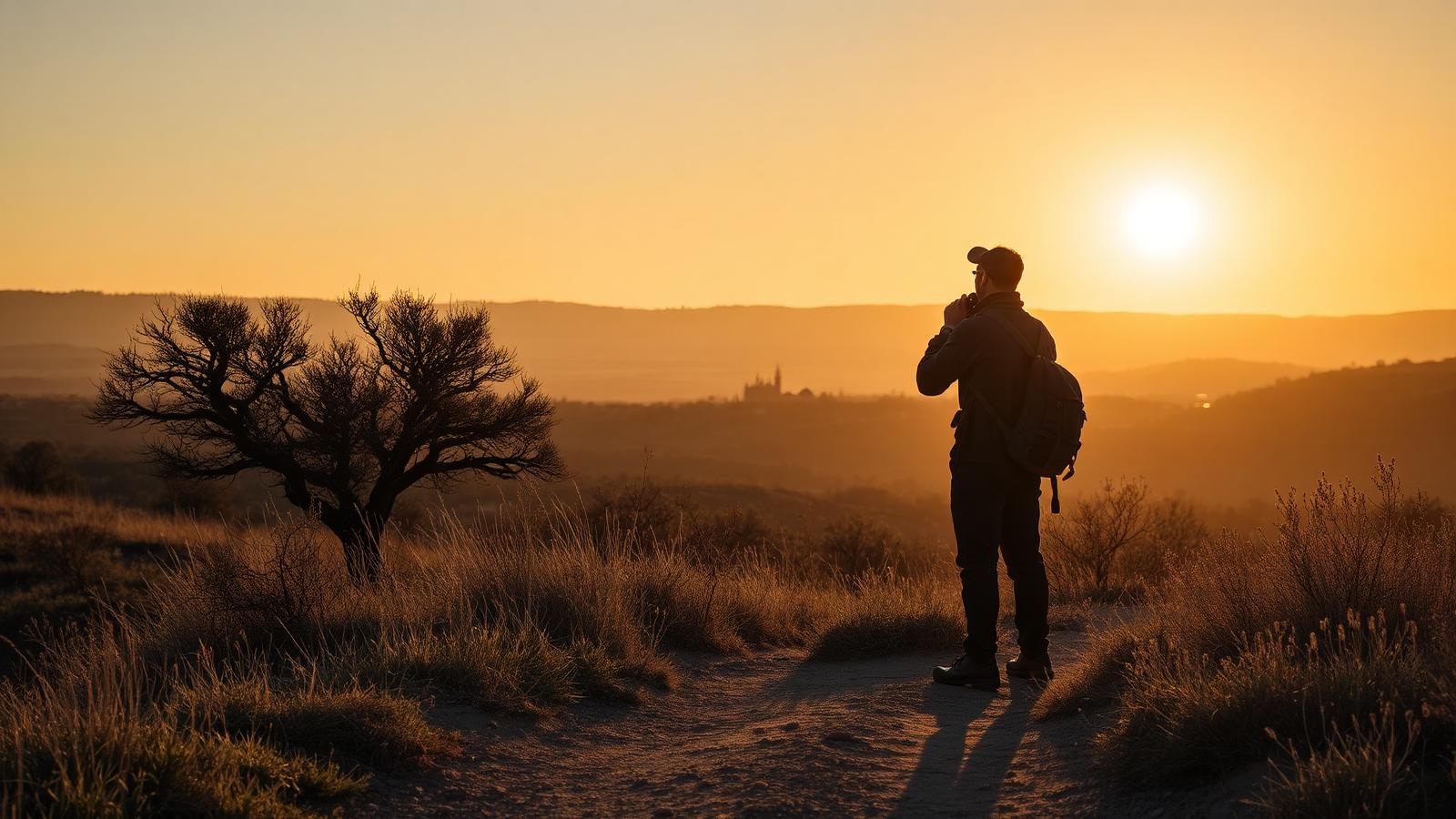
Everything you need to plan a birding visit to the Alto Alentejo, and a little on who's behind it and why this corner of Portugal is worth the journey.
Getting here
A car is essential — the birding is rural, on country roads and farm tracks, and the best sites are spread across the sierra and the plains.
- By airThe nearest airport is Badajoz (Spain), just across the border, roughly [exact time — to add] by road. For more connections, Lisbon and Madrid are both within driving reach. [times — to add]
- By roadBase yourself in Castelo de Vide, in the Portalegre district, on the edge of the Serra de São Mamede Natural Park. [recommended route from Lisbon / from Spain — to add]
- Around the regionEverything on this site sits within an hour or less of town — the sierra to the north, the Elvas plains to the southeast.
When to come
There's no off-season — only different birds. Spring for the bustard display and migration; winter for the cranes, wildfowl and low light; autumn for the quiet passage; summer for early dawns, with the heritage to fill the heat of the day.
What to bring
- Binoculars, and a telescope if you have one — it earns its place on the open plains, where bustards and sandgrouse are scanned at distance.
- Layers. Winter dawns are cold (the sierra even sees snow); summer middays are fierce.
- Sun protection, water, sturdy footwear — and a field guide if you like to work birds out for yourself.
- Patience. The best birds here reward stillness more than effort.
How the birding day works
Early starts are everything: the raptors wait for the thermals, the steppe birds feed and display at first light. Much of the plains is best watched from the vehicle — it's the finest hide there is. Come back to Castelo de Vide for the heat of midday or for the history, and head out again as the day cools.
Birding responsibly
This is sensitive country. The Bonelli's Eagle is Endangered in Portugal; the steppe birds are in decline across Iberia. Watching them well means leaving them undisturbed:
- Watch from the vehicle and stay on the public tracks.
- Never approach a displaying bustard or a nesting cliff; keep your distance and move on.
- Leave no trace, and respect the archaeology — never climb the menhir or the antas.
Seeing these birds well is a privilege earned by stillness, not pursuit. We'd rather you saw fewer birds calmly than disturbed a single one.
A recognized birding region
The Alto Alentejo's birding potential isn't a claim we made up; it's recognized. Turismo de Portugal has run dedicated birdwatching-tourism training for the Serra de São Mamede, with field days across Castelo de Vide, Marvão, Portalegre and Arronches. And Castelo de Vide's own council has published a bird guide to the Póvoa e Meadas reservoir, where over 170 species have been recorded around a single lake — one of the richest inland corners in the country.
Our approach
We bird this country the way it asks to be read: slowly, locally, and with its history alongside its wildlife — because here they are the same landscape. Stays are in our three houses in Castelo de Vide, booked direct and arranged personally, so each visit is shaped around the season and around what you most want to see.
[Your introduction — in the first person. Who you are, why you know this ground, why you made this. The most authentic content on the page — write it as you write the field notes.]
Further reading
The standard references for birding this region, if you'd like to go deeper:
- Gonçalo Elias, Onde Observar Aves no Alentejo: Serra de São Mamede (also in English as Birding hotspots in the Alentejo: Serra de São Mamede).
- Gonçalo Elias, Aves do Alentejo: Lista Anotada — the annotated checklist for the region.
- Gonçalo Elias & José Frade, Aves de Portugal Continental — the photographic field guide.
- avesdeportugal.info — the standard online reference for Portuguese birds, with pages for São Mamede, Castelo de Vide and Elvas.
Plan your visit
Tell us when you can come and what you'd most like to see — we'll reply by email.
The newsletter
What's flying now
A short, seasonal note from the Serra — what to listen for, what's passing through.