The Land & Its People · Alto Alentejo
The megalithic landscape
The first people to read this land
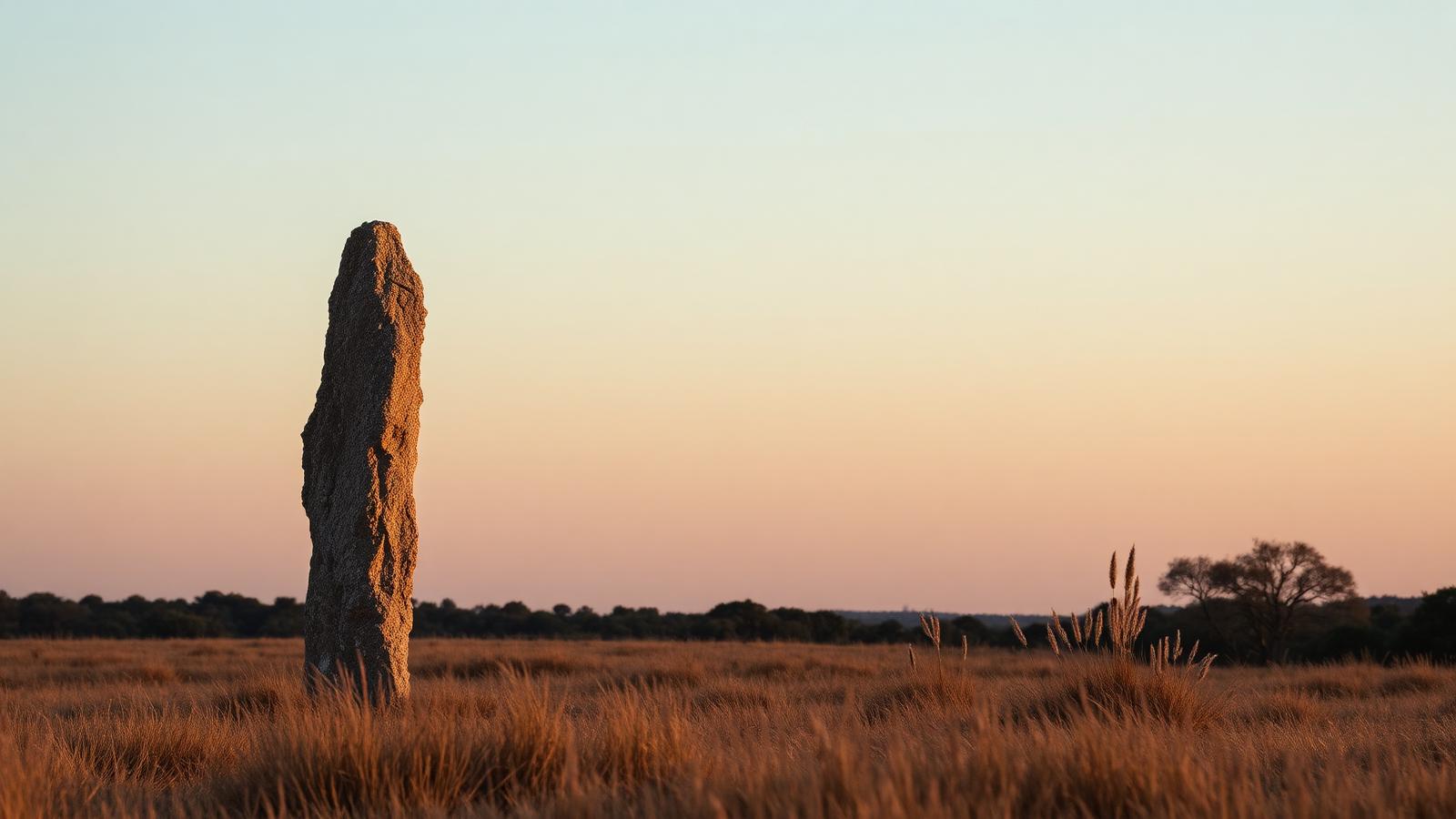
Long before the castle, before the Romans, this country was already being read and marked. Along the line where the granite of the Serra de São Mamede meets the schist, Neolithic communities raised menhirs and built antas (dolmens) — and they did it on the same high, far-seeing ground that the raptors and, later, the fortress-builders would choose.
The oldest chapter of "people in this land" is written in standing stone.
The Menir da Meada
The headline is extraordinary: the largest menhir in the Iberian Peninsula — a granite monolith over seven metres long, around eighteen tonnes — and, by radiocarbon dating of its base, one of the oldest dated menhirs known anywhere, raised roughly seven thousand years ago, some two millennia before the great dolmens. It stands alone on the granite plateau of the River Sever, ~12 km north of town. A National Monument.
Measurements and dating — to confirm on the ground.
An aligned landscape
It isn't a lone curiosity. The big menhirs were set out with deliberate regularity along the granite corridor, each placed to be seen from the next — sight-lines across the land — bounding a sacred, sepulchral ground that includes the Coureleiros necropolis, a cluster of antas you can walk to among the fields and oaks.
Where the birds come in
The Menir da Meada rises beside Póvoa e Meadas — the very reservoir of the doorstep birding, with its grebes, its oak-wood birds, and its own PR4 trail past a rock-cut grave and a necropolis. Deep time and live birds, on the same granite by the same river.
Plan your visit